
Have your dishes started coming out cloudy, greasy, or with tiny bits of food stuck to them? Before you blame your detergent or think your dishwasher is wearing out, check the filter. A dirty filter is one of the most common reasons a dishwasher stops cleaning effectively.
If you’re wondering how to clean dishwasher filter with vinegar, you’re in the right place. Vinegar is an inexpensive, natural cleaner that helps dissolve grease, mineral buildup, and unpleasant odors without the need for harsh chemicals. In this guide, you’ll learn how to clean dishwasher filter, whether you own a KitchenAid, Whirlpool, Maytag, Frigidaire, or another popular brand.
Why Cleaning Your Dishwasher Filter Matters
Your dishwasher filter has one important job: catching food particles and preventing them from being redeposited onto your dishes.
Over time, the filter collects:
- Food scraps
- Grease
- Soap residue
- Hard water minerals
- Bacteria that cause unpleasant odors
When the filter becomes clogged, your dishwasher has to work harder, resulting in poor cleaning performance, unpleasant smells, and even drainage problems.
Cleaning the filter regularly keeps your dishwasher running efficiently and can extend its lifespan.
Can You Clean a Dishwasher Filter With Vinegar?
Absolutely. White distilled vinegar is an excellent natural cleaner because it:
- Breaks down grease
- Dissolves mineral deposits
- Removes soap scum
- Neutralizes odors
- Helps loosen stuck-on food particles
However, vinegar works best as part of the cleaning process rather than as the only cleaning agent. For heavily soiled filters, a little dish soap combined with vinegar delivers even better results.
What You’ll Need
Gather these supplies before getting started:
- White distilled vinegar
- Warm water
- Mild dish soap
- Soft toothbrush or small cleaning brush
- Soft sponge
- Microfiber cloth
- Sink or large bowl
Avoid using steel wool or abrasive scrubbers, which can damage the filter mesh.
How to Clean Dishwasher Filter With Vinegar
Follow these simple steps for a thorough cleaning.
Step 1: Turn Off the Dishwasher
For safety, switch off the dishwasher and make sure it has completely cooled before removing any parts.
Step 2: Locate the Filter
Most modern dishwashers have the filter at the bottom of the tub beneath the lower spray arm.
Remove the bottom rack to gain easy access.
Most filters twist counterclockwise before lifting out.
If you’re unsure, consult your owner’s manual.
Step 3: Remove Loose Debris
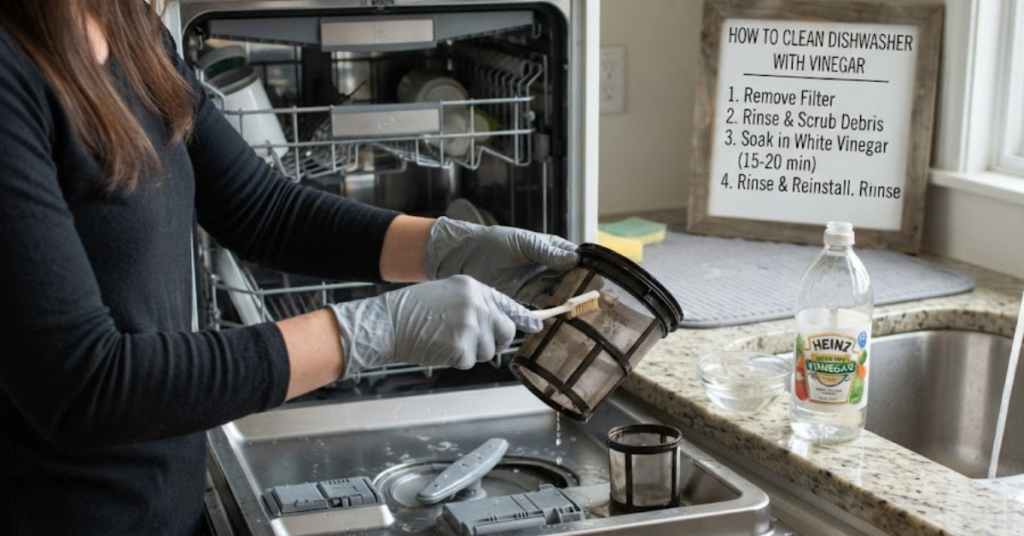
Before soaking the filter, rinse away loose food particles under warm running water.
Avoid forcing large debris through the mesh.
Step 4: Soak the Filter in Vinegar
Fill a bowl with equal parts:
- Warm water
- White distilled vinegar
Submerge the filter completely.
Let it soak for 20 to 30 minutes.
The vinegar helps soften grease, dissolve mineral deposits, and loosen stubborn residue.
Step 5: Gently Scrub the Filter
After soaking, use a soft toothbrush to clean:
- Fine mesh
- Plastic frame
- Hard-to-reach corners
If grease remains, add a drop of mild dish soap to the brush.
Scrub gently to avoid damaging the filter.
Step 6: Rinse Thoroughly
Rinse the filter under warm running water until all debris and vinegar residue have been removed.
Inspect both sides for trapped food particles.
Step 7: Reinstall the Filter
Place the filter back into its housing.
Turn it clockwise until it locks securely into place.
A loose filter can affect dishwasher performance and may even damage internal components.
How Often Should You Clean Your Dishwasher Filter?
The ideal cleaning schedule depends on how often you use your dishwasher.
| Dishwasher Usage | Recommended Cleaning |
| Daily | Every 2–4 weeks |
| Several times a week | Once a month |
| Weekly | Every 2–3 months |
Homes with large families or frequent cooking may need to clean the filter more often.
Signs Your Dishwasher Filter Needs Cleaning
Not sure if it’s time?
Watch for these warning signs:
- Dishes feel gritty after washing
- Food particles remain on plates
- Dishwasher smells unpleasant
- Water drains slowly
- Glassware appears cloudy
- Longer wash cycles
A dirty filter is often the first thing to check when cleaning performance declines.
How to Clean Dishwasher Filter KitchenAid
If you’re searching for how to clean dishwasher filter KitchenAid, the process is straightforward.
Most KitchenAid dishwashers feature a removable Ultra Fine Filter and a lower filter assembly.
To clean:
- Remove the lower rack.
- Twist the cylindrical filter counterclockwise.
- Lift both filter pieces out.
- Soak in warm water and vinegar.
- Gently scrub with a soft brush.
- Rinse thoroughly.
- Lock both filters back into place.
Cleaning the KitchenAid filter every month helps maintain excellent washing performance.
How to Clean Dishwasher Filter Whirlpool
Wondering how to clean dishwasher filter Whirlpool models?
Most Whirlpool dishwashers have a removable filter beneath the lower spray arm.
Follow the same steps:
- Twist and remove the filter
- Soak in vinegar solution
- Brush away debris
- Rinse
- Reinstall securely
Whirlpool recommends checking the filter regularly if dishes are not coming out clean.
How to Clean Dishwasher Filter Maytag
Learning how to clean dishwasher filter Maytag models is simple because many use a removable manual filter.
After removing the lower rack:
- Unlock the filter
- Soak it in warm vinegar solution
- Clean with a soft toothbrush
- Rinse thoroughly
- Securely reinstall
Regular maintenance helps prevent odors and improves cleaning results.
How to Clean Dishwasher Filter Frigidaire
If you own a Frigidaire dishwasher, you may be searching for how to clean dishwasher filter Frigidaire.
Many Frigidaire models use a removable cylindrical filter.
To clean:
- Twist the filter out
- Soak in vinegar for 20–30 minutes
- Remove grease with a soft brush
- Rinse well
- Lock it back into place
Always ensure the filter is seated correctly before running another cycle.
Can You Run Vinegar Through the Dishwasher?
Yes—but use moderation.
After cleaning the filter, you can freshen the dishwasher by placing one cup of white vinegar in a dishwasher-safe bowl on the top rack.
Run an empty hot-water cycle.
This helps remove:
- Hard water deposits
- Soap buildup
- Mild odors
However, avoid doing this too frequently. Repeated exposure to vinegar may affect certain rubber seals over time, especially in older dishwashers.
Common Mistakes to Avoid
To keep your dishwasher in top condition, avoid these common errors:
- Using bleach on stainless steel interiors
- Scrubbing the filter with wire brushes
- Forgetting to reinstall the filter properly
- Running the dishwasher without the filter installed
- Ignoring food buildup for months
A few minutes of maintenance each month can prevent costly repairs later.
Extra Dishwasher Maintenance Tips
Cleaning the filter is only part of proper dishwasher care.
For best performance:
- Wipe the door gasket monthly.
- Clean the spray arm holes if clogged.
- Remove food scraps from dishes before loading.
- Use the correct dishwasher detergent.
- Run a monthly cleaning cycle with vinegar or a dishwasher cleaner.
- Leave the door slightly open after use to reduce moisture buildup.
These simple habits help your dishwasher stay cleaner and more efficient.
Frequently Asked Questions
How do you clean a dishwasher filter with vinegar?
Remove the filter, soak it in a mixture of equal parts warm water and white vinegar for 20–30 minutes, gently scrub it with a soft brush, rinse thoroughly, and reinstall it.
Is vinegar safe for dishwasher filters?
Yes. White distilled vinegar is generally safe for cleaning most plastic and stainless steel dishwasher filters. Avoid prolonged soaking or excessive use on dishwashers with aging rubber seals.
How often should I clean my dishwasher filter?
For households that use the dishwasher daily, cleaning the filter every 2–4 weeks is ideal. Less frequent use may only require cleaning every two to three months.
Can I use baking soda instead of vinegar?
Baking soda is excellent for deodorizing the dishwasher but isn’t as effective at dissolving grease and mineral deposits. For best results, use vinegar for the filter and baking soda for deodorizing the dishwasher interior.
Why does my dishwasher still smell after cleaning the filter?
Odors may also come from dirty spray arms, drain hoses, door seals, or standing water in the bottom of the dishwasher. A complete dishwasher cleaning usually resolves lingering smells.
Can I put the dishwasher filter in the dishwasher to clean it?
No. It’s best to clean the filter by hand. Running it through a wash cycle may not remove trapped debris and could potentially damage delicate filter mesh.
Does every dishwasher have a removable filter?
Most modern dishwashers have removable filters, but some older models feature self-cleaning filters. Check your owner’s manual to determine which type your dishwasher uses.
Conclusion
Knowing how to clean dishwasher filter with vinegar is one of the easiest ways to improve your dishwasher’s performance, eliminate unpleasant odors, and keep your dishes sparkling clean. With just a few household items and about 30 minutes of your time, you can remove grease, food particles, and mineral buildup that reduce cleaning efficiency.
Whether you’re learning how to clean dishwasher filter KitchenAid, Whirlpool, Maytag, or Frigidaire, the process is nearly identical and requires very little effort. Make filter cleaning part of your monthly kitchen maintenance routine, and your dishwasher will reward you with cleaner dishes, fewer odors, and a longer service life. For even better results, explore related guides on cleaning dishwasher spray arms, descaling hard water buildup, and maintaining other essential kitchen appliances.