
Baseboards are one of those parts of the home that are easy to overlook—until you notice a thick layer of dust, scuff marks, or stubborn grime. The challenge is cleaning them thoroughly without damaging the paint or finish. Fortunately, learning how to clean baseboards without removing paint is easier than you might think, and it doesn’t require expensive cleaning products.
In this guide, you’ll discover how to clean baseboards safely using common household supplies. We’ll also cover the easiest ways to clean baseboards without bending over, prepare them before painting, remove dirt from both baseboards and walls, and keep them looking freshly painted all year long.
Why Baseboards Get Dirty So Quickly
Baseboards sit close to the floor, making them magnets for dust, pet hair, dirt, and everyday scuff marks. Air circulation also pushes dust toward walls, where it settles along trim and molding.
Common causes of dirty baseboards include:
- Household dust
- Pet hair and dander
- Muddy shoes
- Vacuum and furniture scuffs
- Kitchen grease
- Fingerprints in high-traffic areas
Regular cleaning prevents grime from becoming difficult to remove and helps protect painted surfaces.
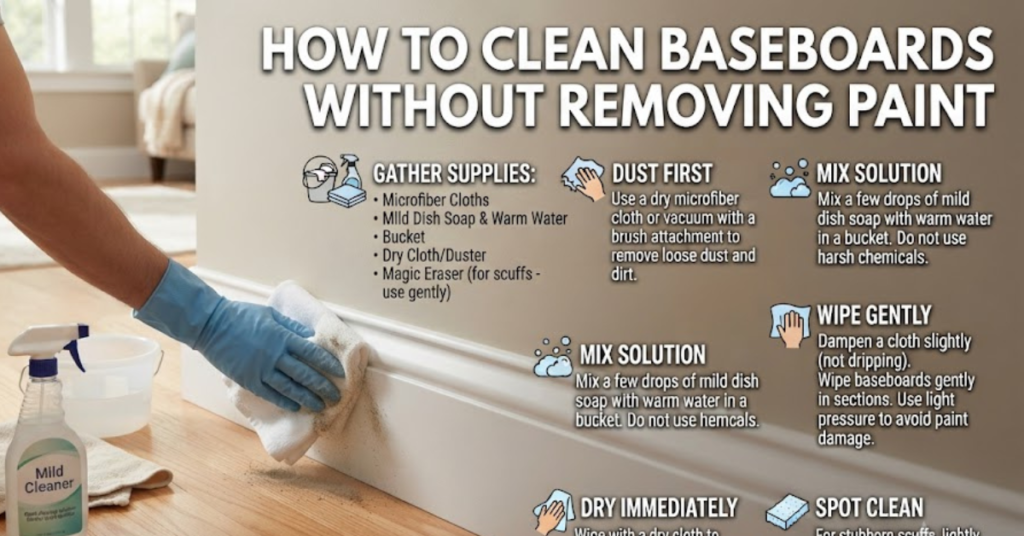
What You’ll Need
Most baseboards can be cleaned with items you already have at home.
Gather these supplies:
- Microfiber cloths
- Soft sponge
- Vacuum with a brush attachment
- Bucket of warm water
- Mild dish soap
- White vinegar (optional)
- Magic Eraser (for stubborn scuffs)
- Soft-bristle brush or old toothbrush
- Dry towel
- Mop with microfiber pad (optional)
Avoid abrasive scrubbers, steel wool, or harsh chemical cleaners that can dull or remove paint.
How to Clean Baseboards Without Removing Paint
The safest method focuses on gentle cleaning instead of aggressive scrubbing.
Step 1: Remove Dust First
Begin by vacuuming along the baseboards using a soft brush attachment.
Alternatively, wipe away loose dust with a dry microfiber cloth.
Removing dust first prevents it from turning into muddy streaks during washing.
Step 2: Prepare a Gentle Cleaning Solution
Mix together:
- 1 gallon of warm water
- A few drops of mild dish soap
For greasy areas, add a small splash of white vinegar.
Avoid using strong bleach or ammonia-based cleaners on painted trim.
Step 3: Wipe the Baseboards
Dip a microfiber cloth into the cleaning solution and wring it out thoroughly.
The cloth should be damp—not soaking wet.
Wipe along the baseboards from top to bottom, working in small sections.
Step 4: Remove Scuff Marks
For stubborn shoe marks or dark streaks:
- Lightly dampen a Magic Eraser.
- Rub gently with minimal pressure.
- Test in an inconspicuous area first, as excessive scrubbing can dull glossy paint finishes.
For delicate paint, a microfiber cloth with a little dish soap is often enough.
Step 5: Dry Immediately
Use a clean, dry towel to wipe away any remaining moisture.
Drying prevents water spots and protects painted surfaces from prolonged moisture exposure.
How to Clean Baseboards Easily
If you’re looking for how to clean baseboards easily, the secret is regular maintenance.
Try this quick routine:
- Dust weekly with a microfiber duster.
- Wipe monthly using warm, soapy water.
- Spot-clean scuff marks as they appear.
Cleaning small amounts of dirt regularly is much easier than tackling months of built-up grime.
How to Clean Baseboards Fast
Need to clean your entire house quickly?
Here’s how to clean baseboards fast:
- Vacuum all baseboards first.
- Fill one bucket with warm soapy water.
- Use two microfiber cloths—one damp and one dry.
- Work room by room.
- Replace dirty water as needed.
For large homes, a microfiber flat mop can significantly reduce cleaning time.
How to Clean Baseboards Without Bending Over
One of the biggest complaints about cleaning trim is the constant bending.
If you’re wondering how to clean baseboards without bending over, here are several practical options:
Use a Microfiber Mop
A flat microfiber mop with a swivel head easily reaches baseboards while allowing you to remain standing.
Lightly dampen the microfiber pad before use.
Use an Extendable Duster
An extendable microfiber duster quickly removes dust between deep cleanings.
It’s ideal for routine maintenance.
Attach a Cloth to a Broom
Secure a microfiber cloth around a broom head with rubber bands.
Lightly dampen the cloth and wipe along the baseboards.
This simple trick works surprisingly well for long hallways.
How to Clean Baseboards Without Bending
Whether you use a microfiber mop, extendable cleaning tool, or long-handled scrubber, cleaning while standing reduces strain on your back and knees.
Many professional house cleaners use these tools because they’re faster and more comfortable during whole-house cleaning.
How to Clean Baseboards Before Painting
Preparing trim before repainting is essential for a smooth, long-lasting finish.
Here’s how to clean baseboards before painting:
- Vacuum away dust.
- Wash with warm water and mild dish soap.
- Remove grease using diluted vinegar if necessary.
- Rinse with clean water.
- Allow the baseboards to dry completely.
- Lightly sand glossy surfaces if recommended by your paint manufacturer.
Clean trim helps paint adhere evenly and reduces peeling later.
How to Clean Baseboards and Walls Together
Dust often collects on both the walls and the trim.
For the best results:
- Dust the walls first.
- Clean the upper wall with a microfiber cloth.
- Wash the baseboards last.
- Dry everything thoroughly.
Working from top to bottom prevents dirty water from dripping onto already-clean surfaces.
How to Remove Tough Stains From Baseboards
Some stains require a little extra attention.
Crayon Marks
Use a damp microfiber cloth with a small amount of dish soap.
Grease
Mix warm water with a little vinegar and wipe gently.
Shoe Scuffs
A Magic Eraser usually removes them quickly with light pressure.
Sticky Residue
Apply warm soapy water and allow it to sit for one minute before wiping away.
Avoid scraping painted surfaces with sharp objects.
Common Mistakes to Avoid
Protect your painted trim by avoiding these common cleaning mistakes:
- Using abrasive scrub pads
- Scrubbing too aggressively
- Soaking the baseboards with water
- Using harsh bleach or ammonia
- Skipping the dusting step
- Leaving moisture on wood trim
Gentle cleaning preserves both the paint and the material underneath.
How Often Should You Clean Baseboards?
The ideal schedule depends on your household.
| Cleaning Task | Frequency |
| Dusting | Weekly or biweekly |
| Light wiping | Once a month |
| Deep cleaning | Every 3–6 months |
| Before painting | Always |
Homes with pets, young children, or heavy foot traffic may need more frequent cleaning.
Tips to Keep Baseboards Cleaner Longer
Once your baseboards are spotless, these habits will help maintain them:
- Vacuum floors regularly.
- Dust with a microfiber cloth every week.
- Clean spills immediately.
- Use felt pads under furniture to prevent scuffs.
- Keep indoor humidity at moderate levels to reduce dust buildup.
- Wipe fingerprints as soon as you notice them.
A little routine maintenance goes a long way.
Frequently Asked Questions
How do you clean baseboards without removing paint?
Use a damp microfiber cloth with warm water and a few drops of mild dish soap. Avoid abrasive scrubbers, harsh chemicals, and excessive moisture that can damage painted surfaces.
What is the easiest way to clean baseboards?
The easiest method is to dust first with a microfiber cloth or vacuum brush attachment, then wipe with a damp microfiber cloth using a mild soap solution.
How do you clean baseboards without bending over?
A microfiber flat mop, extendable duster, or broom wrapped with a microfiber cloth allows you to clean baseboards comfortably while standing.
Can vinegar damage painted baseboards?
When diluted with water and used sparingly, white vinegar is generally safe for most painted baseboards. Avoid using full-strength vinegar on delicate or freshly painted surfaces.
Should you clean baseboards before painting?
Yes. Dirt, grease, and dust can prevent paint from adhering properly. Always wash and dry baseboards thoroughly before sanding or painting.
How often should baseboards be cleaned?
Dust them weekly or biweekly, wipe them monthly, and perform a deeper cleaning every three to six months, depending on household traffic and dust levels.
Can Magic Erasers remove paint?
Magic Erasers are mildly abrasive. While they’re effective for removing scuff marks, excessive pressure may dull or remove paint, especially on glossy finishes. Always test a hidden area first.
Conclusion
Learning how to clean baseboards without removing paint is one of the simplest ways to make your home look cleaner and better maintained. By using gentle cleaning solutions, microfiber cloths, and proper techniques, you can safely remove dust, dirt, grease, and scuff marks without damaging the painted finish.
Whether you’re looking for how to clean baseboards easily, how to clean baseboards fast, how to clean baseboards without bending over, or how to clean baseboards before painting, the key is consistency. A few minutes of routine maintenance every month can keep your trim looking freshly painted and extend its lifespan. For even better results, consider pairing your baseboard cleaning routine with regular wall washing and floor maintenance to give every room a polished, well-cared-for appearance.