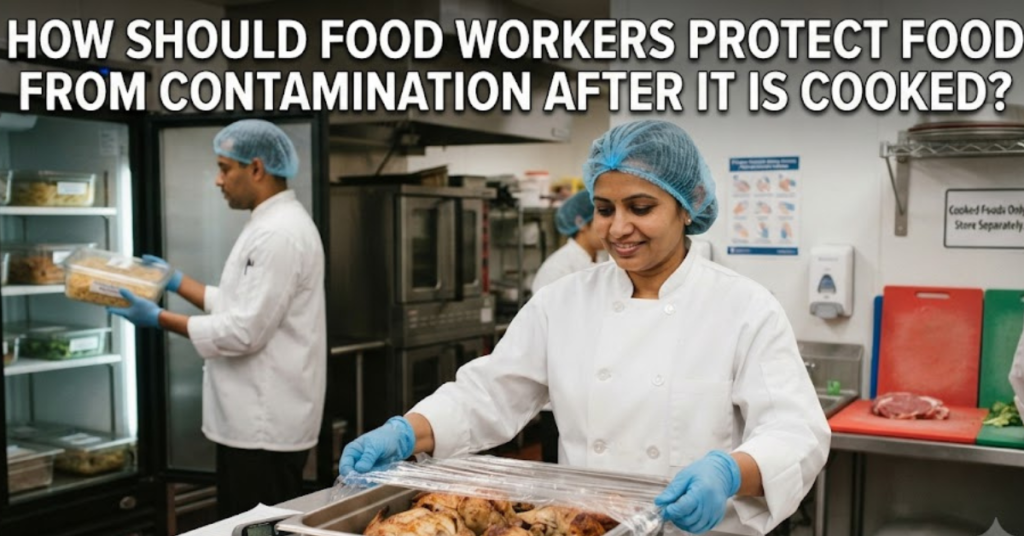

Cooking kills many harmful microorganisms, but that doesn’t mean food is automatically safe from that point forward. How should food workers protect food from contamination after it is cooked? The key is to prevent the cooked food from coming into contact with contaminated hands, utensils, surfaces, raw foods, or other sources of contamination.
Once food has been cooked, it can become contaminated again if it is handled carelessly. This is why food workers must use clean equipment, practice good personal hygiene, keep cooked foods protected, and maintain safe holding temperatures.
Proper post-cooking handling is one of the most important parts of food safety because even food that was safely cooked can become a source of foodborne illness if it is contaminated afterward.
Why Cooked Food Still Needs Protection
Cooking can destroy many harmful bacteria and other microorganisms, but cooked food can be exposed to new contaminants during handling, storage, transportation, or service.
For example, imagine a worker prepares a batch of cooked chicken. The chicken may have reached a safe cooking temperature, but if the worker uses the same unwashed cutting board or utensil that was used for raw chicken, contamination can occur again.
This is known as cross-contamination.
Cooked food should therefore be treated as ready-to-eat food when it is no longer going through another cooking step that would control contamination.
How Should Food Workers Protect Cooked Food From Contamination?
Food workers should use several protective practices rather than relying on one method.
The most important steps include:
- Use clean and sanitized utensils and food-contact surfaces.
- Wash hands properly before handling cooked or ready-to-eat food.
- Avoid touching ready-to-eat food with bare hands when prohibited by food-safety rules.
- Keep cooked food separate from raw meat, poultry, seafood, and eggs.
- Store food in clean, covered, or otherwise protected containers.
- Use clean gloves, tongs, scoops, or other appropriate utensils.
- Keep food at the proper hot- or cold-holding temperature.
- Protect food from coughing, sneezing, dust, dirty equipment, and other contaminants.
- Never place cooked food back onto a surface that held raw food unless the surface has been properly cleaned and sanitized.
These practices work together to reduce the chance of contamination.
1. Use Clean and Sanitized Equipment
One of the simplest ways to protect cooked food is to make sure everything that touches it is clean and properly sanitized when required.
This includes:
- Cutting boards
- Knives
- Serving utensils
- Storage containers
- Food-contact surfaces
- Preparation equipment
- Counters and work surfaces
A utensil that was used with raw chicken, for example, shouldn’t be used to handle cooked chicken unless it has been properly cleaned and sanitized.
The same principle applies to preparation surfaces. Never transfer cooked food onto a contaminated surface.
2. Wash Hands Before Handling Cooked Food
Clean hands are essential when handling cooked and ready-to-eat foods.
Food workers should wash their hands at appropriate times, including before handling food and after activities that could contaminate their hands.
Workers should be especially careful after:
- Using the restroom
- Touching their face or hair
- Handling raw meat or poultry
- Handling garbage
- Eating or drinking
- Touching dirty equipment
- Coughing or sneezing into their hands
Handwashing helps prevent microorganisms from being transferred from the worker to the food.
It’s also important to remember that gloves do not replace handwashing. Workers should wash their hands before putting on gloves and change gloves when they become contaminated or when the task changes.
3. Prevent Cross-Contamination
Cross-contamination occurs when harmful microorganisms are transferred from one food, surface, utensil, or person to another.
After cooking, this becomes especially important because the food may no longer receive another cooking step.
For example:
Raw chicken → contaminated utensil → cooked chicken
The cooked chicken could become contaminated even though it was previously cooked properly.
Food workers can reduce this risk by keeping raw and cooked foods separated and using properly cleaned and sanitized equipment.
4. Protect Cooked Food From Raw Foods
Raw meat, poultry, seafood, and eggs can carry harmful microorganisms.
Cooked food should be kept away from these raw products during preparation, storage, and service.
Good practices include:
- Store raw foods separately from ready-to-eat foods.
- Use separate equipment when appropriate.
- Clean and sanitize surfaces between tasks.
- Keep raw-food containers from leaking onto cooked foods.
- Don’t place cooked food on a plate or tray that previously held raw food unless it has been properly cleaned.
A small mistake in food placement can undo an otherwise safe cooking process.
5. Use Utensils Instead of Bare Hands When Required
Ready-to-eat foods may be handled with utensils such as:
- Tongs
- Scoops
- Serving spoons
- Deli tissue
- Clean gloves
Food-safety requirements regarding bare-hand contact can vary by jurisdiction and food operation, so workers should follow the applicable food code and workplace procedures.
The general principle is straightforward: avoid unnecessary bare-hand contact with ready-to-eat food.
6. Keep Cooked Food Covered and Protected
Cooked food should be protected from contamination while it is being stored, transported, displayed, or served.
Depending on the food and operation, protection may include:
- Covered containers
- Food-grade wrapping
- Properly designed display cases
- Sneeze guards
- Clean storage equipment
- Appropriate food containers
Covering food helps protect it from contaminants in the surrounding environment and from accidental contact by workers or customers.
However, simply covering food isn’t enough. The food must also be maintained at the appropriate temperature and handled safely.
7. Maintain Safe Holding Temperatures
Temperature control is another critical part of protecting cooked food.
When cooked food is being held for service, it generally needs to be maintained at a safe hot- or cold-holding temperature according to the applicable food code.
Under the U.S. FDA Food Code framework, hot food is generally held at 135°F (57°C) or above, while cold food is generally held at 41°F (5°C) or below.
Temperature requirements can differ depending on the jurisdiction and specific food, so food workers should follow the rules that apply to their operation.
Why does temperature matter?
Certain microorganisms can multiply rapidly when food is kept in unsafe temperature ranges for too long. Proper temperature control slows or prevents that growth.
8. Monitor Food Temperatures
Food workers shouldn’t simply assume that a hot or cold holding unit is maintaining the correct temperature.
Use an appropriate, properly functioning food thermometer to check food temperatures as required.
Workers should also monitor holding equipment and take corrective action if food falls outside the required temperature range.
A thermometer provides information that appearance alone cannot.
Food can look perfectly normal while being held at an unsafe temperature.
9. Handle Food With Clean Gloves and Utensils
Gloves can provide an additional barrier between hands and ready-to-eat food, but only when they’re used correctly.
Workers should:
- Wash their hands.
- Put on clean gloves.
- Avoid touching contaminated surfaces while wearing gloves.
- Change gloves when they become contaminated or damaged.
- Wash hands before putting on a new pair.
Gloves should never create a false sense of security. Touching a dirty refrigerator handle and then grabbing cooked food with the same gloves can still spread contamination.
10. Protect Food During Service
Food can become contaminated even after it reaches the serving area.
During service, workers should keep food protected from:
- Customers touching food
- Coughing and sneezing
- Dirty utensils
- Unclean serving surfaces
- Improper temperature control
- Cross-contamination between different foods
Serving utensils should be kept clean and replaced or cleaned as required.
Food displayed for customers should also be protected using appropriate equipment and procedures.
Cooked Food and Ready-to-Eat Food
The distinction between cooked food and ready-to-eat food is useful for understanding why careful handling matters.
Ready-to-eat foods generally don’t require another cooking step before consumption. Examples can include certain cooked foods, salads, sandwiches, cut fruits, and other foods prepared for immediate consumption.
Because there may be no later cooking step to destroy contaminants, preventing contamination during handling is especially important.
What Food Workers Should Never Do
Several practices can create unnecessary contamination risks.
Food workers should not:
- Use dirty utensils to serve cooked food.
- Place cooked food on a surface contaminated by raw food.
- Handle ready-to-eat foods carelessly.
- Store raw foods above cooked or ready-to-eat foods when leakage could cause contamination.
- Ignore unsafe holding temperatures.
- Reuse contaminated gloves.
- Handle food after touching contaminated surfaces without washing hands or changing gloves as appropriate.
- Assume that cooking makes subsequent unsafe handling harmless.
The basic rule is simple: once food is safely cooked, protect it from being contaminated again.
A Simple Food-Safety Checklist
Before serving cooked food, food workers can think through these questions:
Is the food protected?
Is it covered, enclosed, or otherwise protected from contamination?
Are the utensils clean?
Are tongs, spoons, knives, containers, and other food-contact items clean and properly sanitized?
Are hands clean?
Has the worker washed their hands before handling the food?
Is raw food separated?
Could raw meat, poultry, seafood, eggs, or contaminated equipment come into contact with the cooked food?
Is the temperature safe?
Is the food being held at the required hot- or cold-holding temperature?
Is the serving area clean?
Are the food-contact surfaces and surrounding equipment clean and suitable for food service?
If the answer to all of these questions is yes, the risk of post-cooking contamination is significantly reduced.
Why Preventing Contamination After Cooking Matters
Foodborne illness can occur when harmful microorganisms or other contaminants enter food and are consumed.
Proper cooking is an important control step, but food safety doesn’t end when the cooking process finishes.
A food worker’s actions afterward can determine whether the food remains safe.
Think of food safety as a chain:
Safe preparation → Proper cooking → Safe handling → Proper storage → Safe serving
A weakness at any point can create a food-safety problem.
Frequently Asked Questions
How should food workers protect food from contamination after it is cooked?
Food workers should protect cooked food by using clean and sanitized equipment, washing their hands, preventing cross-contamination, keeping food covered or otherwise protected, separating cooked food from raw foods, and maintaining proper holding temperatures.
Why can cooked food become contaminated?
Cooked food can become contaminated through dirty hands, utensils, surfaces, raw foods, contaminated equipment, improper storage, or exposure during preparation and service.
Should cooked food be kept away from raw food?
Yes. Raw meat, poultry, seafood, and eggs should be kept separate from cooked and ready-to-eat foods to reduce the risk of cross-contamination.
Do gloves replace handwashing?
No. Gloves do not replace proper handwashing. Workers should wash their hands before putting on gloves and replace gloves when they become contaminated or when required by the task or food-safety procedure.
How should cooked food be stored?
Cooked food should be stored in clean, appropriate containers and protected from contamination. It should also be maintained at the required hot- or cold-holding temperature.
What temperature should hot food be held at?
Under the FDA Food Code framework, hot food is generally held at 135°F (57°C) or above. Local requirements may differ, so food workers should follow the applicable food code and workplace procedures.
What temperature should cold food be held at?
Under the FDA Food Code framework, cold food is generally held at 41°F (5°C) or below. Specific requirements can vary by jurisdiction and food type.
Why is cross-contamination dangerous after cooking?
Cooking can reduce or eliminate many harmful microorganisms, but contamination afterward can reintroduce them. If the food is ready to eat and won’t be cooked again, those contaminants may remain in the food.
Conclusion
So, how should food workers protect food from contamination after it is cooked? They should treat safe handling after cooking as just as important as the cooking process itself. Clean hands, clean and sanitized equipment, proper separation of raw and cooked foods, protected storage, appropriate utensils, and safe holding temperatures all help keep cooked food safe.
The most important idea to remember is simple: cooking may make food safe, but careless handling can make it unsafe again. Food workers who consistently prevent cross-contamination and protect cooked food throughout storage and service can greatly reduce the risk of foodborne illness.