
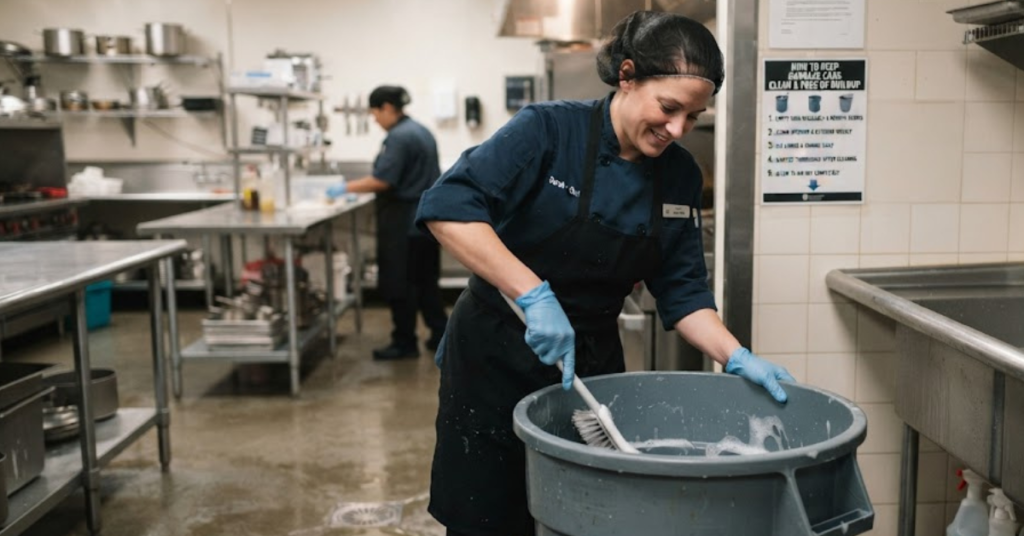

A garbage can may seem like one of the least important items in a food establishment, but poor garbage-can hygiene can quickly create sanitation problems. So, how should food workers keep garbage cans clean and free of buildup? The answer is through regular emptying, thorough cleaning, proper sanitizing when required, and preventing food waste from accumulating inside or around the container.
Garbage containers can collect food residue, grease, moisture, and other organic material. Over time, that buildup can create unpleasant odors and attract pests while making the surrounding area harder to keep sanitary.
For food workers, the goal is simple: keep garbage containers clean, prevent buildup, and make sure waste doesn’t become a source of contamination.
Why Clean Garbage Cans Matter in Food Safety
Garbage containers are designed to hold waste, so they naturally become dirty. The problem starts when waste is allowed to accumulate, leak, or remain on surfaces for extended periods.
Dirty garbage cans can contribute to:
- Unpleasant odors
- Pest attraction
- Bacterial growth
- Liquid spills and residue
- Unsanitary food-preparation areas
- Contamination of nearby surfaces
Keeping garbage containers clean is therefore part of maintaining a sanitary food establishment.
How Should Food Workers Keep Garbage Cans Clean?
Food workers should empty garbage cans regularly and clean them whenever they become soiled. Cleaning should remove visible waste, residue, grease, and buildup rather than simply masking odors.
A good routine includes:
- Emptying containers before they become excessively full.
- Removing spills and food residue promptly.
- Washing containers with an appropriate cleaning method.
- Rinsing away cleaning residue when required.
- Sanitizing food-service containers when applicable.
- Allowing containers to dry appropriately.
- Keeping the area around the container clean.
- Replacing damaged or difficult-to-clean containers when necessary.
The exact cleaning frequency depends on the type of establishment, the amount of waste generated, and applicable local food-safety requirements.
Empty Garbage Cans Regularly
One of the easiest ways to prevent buildup is to avoid letting waste sit in the container longer than necessary.
Garbage should be removed when containers become full or when the establishment’s sanitation procedures call for removal.
Regular removal helps prevent:
- Overflowing waste
- Leaking bags
- Food residue accumulating on container surfaces
- Strong odors
- Pest problems
The container should also be checked after the bag is removed. A bag can prevent some contamination, but it doesn’t eliminate the need to clean the container itself.
Clean Garbage Cans When They Become Soiled
A garbage can doesn’t have to look completely full before it needs cleaning.
If food waste, grease, liquid, or other material gets onto the inside or outside of the container, it should be cleaned according to the establishment’s sanitation procedures.
Visible buildup is a sign that routine cleaning is needed.
Simply inserting a new garbage bag over a dirty container doesn’t solve the underlying sanitation problem.
Wash Away Food Residue and Buildup
Cleaning is different from simply removing the garbage.
Cleaning involves physically removing dirt, food residue, grease, and other unwanted material from the container.
A typical cleaning process may involve:
- Removing the garbage and disposable liner.
- Moving the container to an appropriate cleaning location.
- Removing visible debris.
- Washing the container with an appropriate detergent or cleaning solution.
- Scrubbing areas where residue has accumulated.
- Rinsing as required.
- Following the establishment’s sanitation procedure.
Food establishments should use cleaning chemicals according to their labels and workplace procedures.
Sanitize When Required
After cleaning, sanitizing may be appropriate depending on the type of container, its location, and applicable food-safety requirements.
It’s important to understand the difference:
Cleaning removes dirt and food residue.
Sanitizing reduces microorganisms to a level considered safe under applicable food-safety standards.
Sanitizing works properly only when the surface has been adequately cleaned first. Applying sanitizer over heavy grease or food buildup isn’t an effective substitute for cleaning.
Prevent Garbage Can Buildup
The best cleaning strategy is to prevent excessive buildup in the first place.
Food workers can help by:
- Using appropriately sized garbage liners.
- Removing waste regularly.
- Avoiding overfilled containers.
- Cleaning spills immediately.
- Keeping lids and handles clean.
- Checking for leaks.
- Following the establishment’s waste-management schedule.
A container that is emptied frequently is generally easier to clean than one that is allowed to become heavily soiled.
Keep Garbage Areas Clean Too
Cleaning the garbage can itself isn’t enough.
The surrounding area should also be maintained. Food debris, leaking liquids, and discarded packaging around a garbage container can attract insects and rodents.
Workers should check:
- Floors
- Walls near the garbage area
- Container lids
- Handles
- Wheels or casters
- Nearby drains
- Storage areas
Any waste or residue outside the container should be cleaned promptly using appropriate procedures.
Keep Garbage Away From Food Preparation Areas
Garbage should be managed in a way that prevents it from becoming a source of contamination.
Waste containers should not be allowed to interfere with food preparation, storage, or service.
When garbage is being transported through a food establishment, workers should take care to prevent contact between waste containers and food-contact surfaces.
After handling garbage, workers should follow appropriate handwashing procedures before returning to food preparation.
Use the Right Cleaning Equipment
Garbage cans may require dedicated cleaning tools and supplies.
Depending on the operation, these can include:
- Disposable or reusable cleaning cloths
- Appropriate brushes
- Detergent
- Approved sanitizer
- Gloves or other appropriate protective equipment
- Water at the required temperature
- Appropriate waste-handling equipment
Cleaning supplies should be used according to manufacturer instructions and the food establishment’s written sanitation procedures.
Never mix cleaning chemicals unless the product instructions specifically permit it. Some combinations can create dangerous chemical reactions.
Watch for Leaks and Damage
A damaged garbage can can be difficult to clean properly.
Cracks, holes, broken lids, or heavily worn surfaces can allow waste and liquid to escape or create areas where residue collects.
Food workers should report or replace damaged containers according to workplace procedures.
A garbage container should be durable, cleanable, and suitable for its intended use.
Garbage Can Cleaning Checklist
A simple checklist can make sanitation routines easier to follow.
After emptying the container:
- Check for food residue.
- Look for liquid or grease buildup.
- Inspect the liner and container for leaks.
- Clean visible dirt and residue.
- Wash the container according to established procedures.
- Rinse when required.
- Sanitize when required.
- Allow it to dry appropriately.
- Clean the surrounding area.
- Replace the liner if one is used.
Regular checks help prevent small sanitation problems from becoming larger ones.
Common Garbage Can Cleaning Mistakes
Even well-run food establishments can overlook a few basic practices.
Only replacing the garbage bag
A new liner doesn’t clean the container underneath it.
Waiting until buildup becomes severe
Heavy residue is harder to remove and can contribute to odors and pest problems.
Cleaning but not following sanitation procedures
Where sanitizing is required, it should be performed according to the applicable food code and establishment procedures.
Ignoring the surrounding floor
Waste and liquid outside the container can become a sanitation problem too.
Using damaged containers
Cracked or broken containers may be difficult to clean effectively.
Returning to food preparation without proper hand hygiene
Garbage handling can contaminate hands, so appropriate handwashing is essential before handling food again.
Frequently Asked Questions
How should food workers keep garbage cans clean and free of buildup?
Food workers should empty garbage cans regularly, remove visible residue, wash containers thoroughly, sanitize them when required, and keep the surrounding garbage area clean.
How often should garbage cans be cleaned in a restaurant?
There isn’t one universal schedule for every food establishment. Containers should be cleaned whenever they become soiled or develop buildup, with frequency adjusted to the amount and type of waste produced and applicable local requirements.
Is replacing the garbage bag enough to keep a garbage can clean?
No. A liner helps contain waste, but food residue, grease, and liquid can still accumulate inside the container. The container itself must be cleaned when soiled.
Should garbage cans be sanitized?
Sanitizing requirements depend on the type and location of the container and the applicable food-safety rules. When sanitizing is required, the container should be cleaned first so that the sanitizer can work effectively.
Why does garbage buildup attract pests?
Food residue, moisture, and odors can provide attractive conditions for insects and rodents. Regular waste removal and cleaning help reduce these risks.
What should workers do after handling garbage?
Workers should follow appropriate handwashing procedures before returning to food preparation or handling ready-to-eat food.
What should happen if a garbage can is cracked or damaged?
A damaged container should be reported and repaired or replaced according to workplace procedures. Containers should be durable and easy to clean.
Conclusion
So, how should food workers keep garbage cans clean and free of buildup? The answer is consistent waste removal, thorough cleaning, appropriate sanitizing when required, and regular attention to the surrounding area. Garbage containers shouldn’t be allowed to become heavily soiled simply because they’re used for waste.
The best approach is preventive: empty containers regularly, clean them whenever they become dirty, deal with spills promptly, inspect for damage, and follow the food establishment’s sanitation procedures. These simple habits help maintain a cleaner workplace, discourage pests, and support overall food safety.