
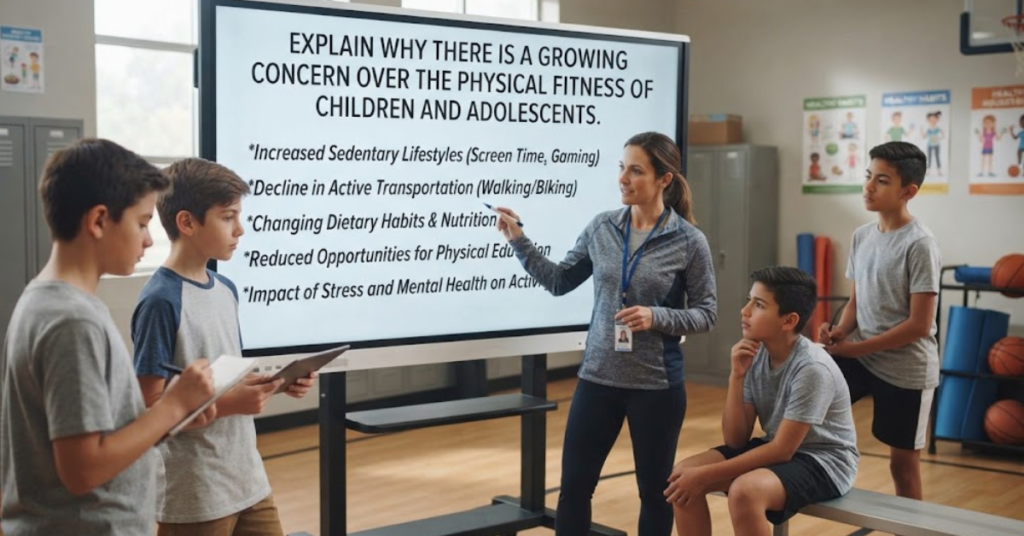

Children are naturally energetic, so it can be surprising to see growing concern about their physical fitness. Yet many children and adolescents today spend more time sitting, using screens, studying, traveling by car, or participating in other sedentary activities than previous generations did.
So, why is there a growing concern over the physical fitness of children and adolescents? The answer is not one single problem. Changes in daily routines, reduced physical activity, sedentary lifestyles, screen use, unhealthy eating patterns, limited opportunities for exercise, and other social and environmental factors can all play a role.
Physical fitness during childhood matters because these years help establish habits that can continue into adulthood. Fitness is also closely connected with cardiovascular health, muscular strength, bone health, coordination, mental well-being, and the ability to participate comfortably in everyday activities.
What Is Physical Fitness in Children and Adolescents?
Physical fitness is more than simply being good at sports or running fast. It refers to several abilities that help a young person move efficiently and stay healthy.
Important components include:
- Cardiorespiratory endurance: How effectively the heart and lungs support prolonged activity.
- Muscular strength: The ability of muscles to produce force.
- Muscular endurance: The ability to perform repeated movements without tiring quickly.
- Flexibility: The ability of joints and muscles to move through an appropriate range of motion.
- Body composition: The relative amounts of fat, muscle, bone, and other tissues in the body.
- Coordination and balance: The ability to control body movements effectively.
A physically fit child does not necessarily need to be an exceptional athlete. The bigger goal is having enough fitness and movement capacity to participate in play, school activities, sports, and everyday life.
Why Is There a Growing Concern Over the Physical Fitness of Children and Adolescents?
Several changes in modern childhood have contributed to the concern.
1. Children Are Becoming More Sedentary
One of the biggest issues is the amount of time young people spend sitting.
Schoolwork, homework, transportation, television, gaming, smartphones, and computers can all contribute to long periods of inactivity. Even when a child participates in some exercise, spending most of the remaining day sitting can still result in a highly sedentary lifestyle.
The problem isn’t that sitting is inherently harmful. Rather, too much sedentary time combined with too little physical activity can make it harder for children to develop and maintain good fitness.
2. Screen Time Has Changed Daily Habits
Technology has transformed the way children learn, communicate, and relax. While screens can provide educational and social benefits, recreational screen use can also replace activities that involve movement.
For example, a child who once spent an afternoon riding a bicycle, playing outside, or walking with friends may now spend those hours gaming or watching videos.
This doesn’t mean every screen-based activity needs to disappear. The important issue is creating a reasonable balance between screen use, sleep, schoolwork, and active time.
3. Less Active Outdoor Play
Outdoor play provides children with natural opportunities to run, climb, jump, walk, balance, and explore.
However, opportunities for independent outdoor activity can be affected by factors such as:
- Limited access to parks or playgrounds
- Traffic and road safety concerns
- Lack of safe recreational spaces
- Busy family schedules
- Weather and environmental conditions
- Reduced opportunities for unsupervised outdoor play
When everyday play becomes less active, children may have fewer chances to develop basic movement skills.
Childhood Obesity and Physical Inactivity
Another major reason for concern is the rise in overweight and obesity among children and adolescents in many parts of the world.
Excess body weight is not simply a matter of appearance. It can increase the risk of several health problems, particularly when unhealthy weight patterns continue into adulthood.
However, it’s important not to reduce children’s health to body weight alone. Fitness, nutrition, physical activity, sleep, mental well-being, and overall health all matter.
A healthy approach focuses on helping children become active and develop sustainable habits rather than making them feel ashamed about their bodies.
Unhealthy Eating Habits Can Add to the Problem
Physical activity is only one part of the equation.
Children’s diets have also changed in many communities. Easy access to highly processed foods, sugary drinks, fast food, and energy-dense snacks can make it harder to maintain a balanced diet.
A diet that regularly provides more energy than the body uses can contribute to excess weight gain. At the same time, inadequate nutrition can affect energy levels and a child’s ability to participate in physical activity.
A balanced diet generally includes a variety of:
- Fruits and vegetables
- Whole grains
- Protein-rich foods
- Dairy or suitable alternatives
- Healthy sources of fats
- Water and other appropriate beverages
Why Physical Fitness Matters During Childhood
The concern isn’t simply about whether children can run a certain distance or perform a particular exercise.
Regular physical activity supports many aspects of development.
Physical Development
Activity helps children develop stronger muscles and bones while improving cardiovascular fitness, coordination, balance, and movement skills.
Mental and Emotional Well-Being
Physical activity can also support psychological well-being. Exercise provides an opportunity to release energy, socialize, build confidence, and develop a sense of accomplishment.
For some children, active play can also provide a valuable break from academic and digital activities.
Healthy Habits for Adulthood
Childhood habits can influence behavior later in life. A young person who learns to enjoy walking, cycling, swimming, playing sports, dancing, or active games may be more likely to remain physically active as they grow older.
That makes childhood an important period for establishing a positive relationship with movement.
Physical Fitness Also Affects Everyday Life
Good fitness isn’t only useful during gym class or sports practice.
A physically capable child may find everyday activities easier, such as:
- Walking to school
- Carrying a backpack
- Climbing stairs
- Playing with friends
- Participating in physical education
- Riding a bicycle
- Running and jumping
- Taking part in recreational activities
When children have poor fitness, ordinary physical tasks can become tiring. That can create a cycle in which they avoid activity because it feels difficult, leading to even less activity over time.
The Role of Schools in Children’s Physical Fitness
Schools are in a unique position because children spend a large portion of their day there.
Physical education classes can introduce students to different forms of exercise while teaching fundamental movement skills. Schools can also provide opportunities for sports, active recreation, walking, and other forms of movement.
However, physical education shouldn’t be the only source of activity.
Schools can encourage movement by providing:
- Quality physical education.
- Safe playgrounds and recreational areas.
- Opportunities for active breaks.
- After-school sports and activities.
- Encouragement for students of different fitness levels.
The goal should be to make physical activity accessible rather than something reserved only for naturally athletic students.
Parents and Families Play an Important Role
Children often learn habits by watching the adults around them.
If physical activity is treated as a normal part of family life, children may be more likely to view movement positively.
Families can encourage activity through simple choices:
- Going for walks together
- Playing outdoors
- Cycling
- Swimming
- Hiking
- Dancing
- Playing active games
- Limiting prolonged recreational screen sessions
- Making active transportation possible when practical
The activity doesn’t have to be expensive or highly structured. Consistency is often more important than having specialized equipment.
Why Organized Sports Are Not the Only Answer
It’s tempting to assume that enrolling a child in competitive sports will solve the fitness problem. For some children, organized sports are an excellent option, but they aren’t appropriate or enjoyable for everyone.
Some children prefer dancing, walking, martial arts, cycling, swimming, playground activities, or simply playing outside.
The best activity is often one the child enjoys enough to keep doing.
This is especially important because making exercise feel like punishment can create negative associations that last well beyond childhood.
Barriers to Children’s Physical Activity
Not every child has the same opportunities to be active.
Physical fitness can be influenced by broader circumstances, including:
- Family income
- Access to safe recreational spaces
- Availability of sports programs
- Transportation
- Neighborhood design
- School resources
- Cultural expectations
- Family schedules
- Weather and climate
- Access to nutritious food
This is why the issue should not be framed simply as children being “lazy.” Their environment can strongly influence how easy or difficult it is to stay active.
How Can Children’s Physical Fitness Be Improved?
Improving fitness doesn’t require turning every child into an athlete. Small, consistent changes can make a meaningful difference.
A practical approach includes:
1. Make movement enjoyable.
Choose activities that children actually like.
2. Reduce prolonged inactivity.
Encourage children to get up, stretch, walk, or play after extended periods of sitting.
3. Encourage active play.
Unstructured games can be just as valuable as organized exercise.
4. Create realistic routines.
A consistent schedule makes physical activity easier to maintain.
5. Support healthy eating.
Offer balanced meals and snacks without turning food or body weight into a source of shame.
6. Protect sleep.
Adequate sleep is an important part of healthy development and recovery.
7. Lead by example.
Children are more likely to value activity when they see adults making movement part of everyday life.
What Role Does Physical Education Play?
Physical education can help children develop the skills and confidence they need to remain active.
A good physical education program should go beyond simply choosing teams for competitive games. It can teach:
- Fundamental movement skills
- Fitness concepts
- Strength and endurance
- Flexibility
- Coordination
- Teamwork
- Safety
- Lifelong physical activities
When students leave school understanding how and why to stay active, physical education can have benefits that extend beyond the classroom.
FAQs About Children’s Physical Fitness
Why is children’s physical fitness a growing concern?
The concern is largely related to lower levels of physical activity, increasing sedentary behavior, screen use, changes in eating patterns, and environmental barriers that can make regular movement more difficult.
How does physical inactivity affect children?
Too little physical activity can contribute to poorer cardiovascular fitness, lower muscular fitness, excess weight gain, and reduced movement skills. It can also limit opportunities for social interaction and active play.
How much physical activity should children get?
International health guidelines generally recommend that children and adolescents accumulate an average of at least 60 minutes per day of moderate-to-vigorous physical activity across the week, with vigorous and muscle- and bone-strengthening activities included several days a week.
Is screen time the main cause of poor physical fitness?
Not necessarily. Screen use is one contributing factor, but children’s fitness is influenced by many things, including physical activity, diet, sleep, environment, family routines, and access to recreational opportunities.
Can physical fitness improve during adolescence?
Absolutely. Fitness can improve at almost any age through appropriate physical activity, good nutrition, adequate recovery, and consistent habits. Training should be suitable for the child’s age, development, and abilities.
Does a child need to play competitive sports to be fit?
No. Walking, cycling, swimming, dancing, active games, hiking, playground activities, and many other forms of movement can contribute to physical fitness.
How can parents encourage children to exercise?
Parents can make activity part of normal family life. Walking together, playing outdoors, trying different activities, and reducing long periods of sitting can help children become more active without making exercise feel like a chore.
Conclusion: Why Children’s Physical Fitness Matters
The growing concern over the physical fitness of children and adolescents reflects a broader change in how young people live, play, travel, eat, and spend their free time. More sedentary behavior, greater recreational screen use, reduced opportunities for active play, and other lifestyle and environmental factors can make it harder for children to stay physically fit.
The solution isn’t to pressure every child into becoming an athlete. Instead, children need regular opportunities to move, nutritious food, adequate sleep, supportive adults, safe spaces, and positive experiences with physical activity.
Building those habits early can give children something far more valuable than a better fitness score: a healthier and more active foundation for the years ahead.