
One careless driver can leave you with medical bills, vehicle damage, and a lot of unanswered questions. The problem becomes even bigger when that driver has no auto insurance or not enough coverage to pay for your losses. That is where uninsured motorist protection can become extremely valuable.
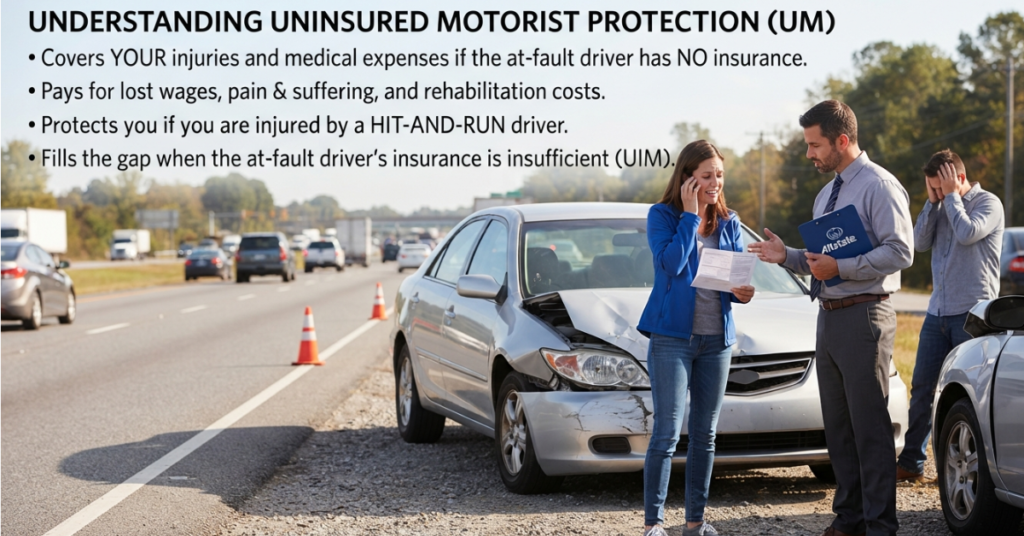
In simple terms, uninsured motorist protection helps you in case of an accident by providing coverage when an at-fault driver doesn’t have the insurance needed to compensate you. Depending on your policy and location, it may help with medical expenses, lost income, and other covered losses after a qualifying accident.
Because insurance rules vary by state and policy, it’s important to understand exactly what your coverage provides.
What Is Uninsured Motorist Protection?
Uninsured motorist (UM) protection is an auto insurance coverage designed to protect you when you’re involved in an accident caused by a driver who doesn’t have liability insurance.
Normally, if another driver causes an accident, their liability insurance is expected to pay for your covered damages. But what happens if the driver has no insurance?
Without uninsured motorist coverage, you may have to pursue payment directly from the at-fault driver. If that person has few assets or little ability to pay, recovering your losses can be difficult.
UM coverage is designed to help fill that gap.
A Simple Example
Imagine you’re driving through an intersection when another driver runs a red light and hits your vehicle.
The other driver is determined to be at fault, but you discover they don’t have auto insurance.
If you have applicable uninsured motorist coverage, your own insurer may cover certain losses, subject to your policy’s limits, deductibles, exclusions, and applicable state law.
This can provide an important financial safety net when the at-fault driver cannot pay.
How Uninsured Motorist Protection Helps After an Accident
The exact benefits vary by state and insurance policy, but uninsured motorist coverage can generally help with certain losses caused by an uninsured at-fault driver.
Depending on your coverage, it may help pay for:
- Medical expenses
- Hospital and rehabilitation costs
- Lost wages or income
- Certain pain-and-suffering damages where permitted
- Other covered injury-related losses
- Property damage in states or policies where uninsured motorist property-damage coverage applies
The important point is that UM coverage is not unlimited. Your policy’s coverage limits determine how much your insurer may pay.
Uninsured Motorist Bodily Injury Coverage
One of the most important forms of UM protection is uninsured motorist bodily injury coverage.
This coverage generally addresses injuries you or covered passengers suffer when an uninsured driver causes a qualifying accident.
For example, suppose you suffer serious injuries after being hit by an uninsured driver. Your medical treatment could involve:
- Emergency care
- Follow-up appointments
- Prescription medication
- Physical therapy
- Lost income from missing work
Depending on your policy and applicable law, UM bodily injury coverage may help with covered expenses and damages.
Why This Coverage Matters
Medical costs can quickly become much larger than people expect. Even if you have health insurance, you could still face deductibles, copayments, exclusions, or other expenses.
UM bodily injury coverage can provide another layer of financial protection, although the way it interacts with health insurance and other coverage depends on the circumstances and applicable rules.
What If the Other Driver Has Insurance but Not Enough?
This is where underinsured motorist (UIM) coverage becomes important.
An uninsured driver has no applicable liability insurance. An underinsured driver has insurance, but their policy limits aren’t high enough to cover your losses.
For example, imagine your covered damages total $75,000, but the at-fault driver’s liability policy only provides $25,000 of applicable coverage.
Depending on state law and your policy, underinsured motorist coverage may help address some of the remaining covered losses, up to the applicable limits.
That’s why you’ll often see UM/UIM coverage discussed together.
Uninsured Motorist vs. Collision Coverage
These coverages can sound similar, but they serve different purposes.
Collision coverage generally helps pay for damage to your vehicle resulting from a covered collision, subject to the policy’s deductible and terms.
Uninsured motorist coverage, depending on its form and state, is primarily designed to protect against losses caused by an uninsured or underinsured driver.
For example:
| Situation | Potentially relevant coverage |
| You damage your car by hitting another vehicle | Collision |
| An uninsured driver injures you | UM bodily injury |
| An underinsured driver causes covered injuries | UIM |
| An uninsured driver damages your vehicle | UM property damage, where available |
| Your vehicle is stolen | Comprehensive |
The specific coverage available depends on your policy and where you live.
Does Uninsured Motorist Coverage Pay for Car Damage?
This is one area where consumers need to pay close attention to their policy.
Uninsured motorist property damage (UMPD) coverage is available in some states and can help pay for vehicle damage caused by an uninsured driver.
However, not every state offers UMPD, and some states or policies handle vehicle damage differently.
You may instead rely on collision coverage for damage to your vehicle, if you carry it.
So, if you’re reviewing your insurance policy, don’t assume that “uninsured motorist coverage” automatically means every type of damage is covered.
Check whether your policy includes:
- UM bodily injury
- UIM bodily injury
- UM property damage, if available
- Collision coverage
- Applicable deductibles and limits
What Happens After an Accident With an Uninsured Driver?
If you’re involved in an accident with an uninsured driver, your first priority should be safety.
After making sure everyone is safe, consider these steps:
1. Get Medical Attention
If anyone is injured, seek appropriate medical care. Some injuries may not be immediately obvious after a collision.
2. Report the Accident
Follow the applicable requirements for reporting the accident to law enforcement and your insurer.
3. Gather Information
If it’s safe to do so, document:
- Vehicle information
- Driver information
- Insurance information, if available
- Witness contact information
- Photos of the accident scene
- Vehicle damage
- Relevant road conditions
4. Notify Your Insurance Company
Contact your insurer promptly and explain that the other driver appears to be uninsured.
Your insurer can tell you what documentation is required and explain how your coverage applies.
5. Keep Records
Save medical bills, repair estimates, receipts, wage-loss documentation, correspondence, and other relevant records.
Good documentation can make the claims process easier.
What If the Driver Leaves the Scene?
An accident involving a driver who flees can create another problem: you may not know whether that driver has insurance.
In many jurisdictions and policies, uninsured motorist coverage can potentially apply to certain hit-and-run accidents, but specific requirements may apply.
For example, your insurer or state law may require you to report the incident promptly or provide evidence that another vehicle was involved.
Because hit-and-run rules vary considerably, don’t assume coverage automatically applies. Contact your insurer and follow the required reporting procedures.
How Much Uninsured Motorist Coverage Do You Need?
There’s no single amount that works for every driver.
When considering UM/UIM limits, think about the potential financial consequences of a serious accident.
Consider:
- Your state’s minimum insurance requirements
- Your health insurance situation
- Your income
- Your assets
- The value of your vehicle
- How much you drive
- The number of people regularly riding in your vehicle
- The cost of higher coverage limits
A serious injury can create expenses far beyond the cost of repairing a car. For that reason, choosing coverage solely based on the cheapest monthly premium may leave you with less protection than you expect.
Is Uninsured Motorist Coverage Required?
Whether UM coverage is mandatory depends on the state.
Some states require drivers to carry uninsured motorist coverage, while others make it optional or provide opportunities to reject certain coverage.
Even when coverage isn’t legally required, it may still be worth considering.
The key is to understand your state’s requirements and the coverage included in your individual policy.
Common Misunderstandings About UM Coverage
“If the other driver is uninsured, I’ll automatically receive money.”
Not necessarily.
You still have to establish that the accident qualifies for coverage, and your insurer may investigate the claim. Policy limits, exclusions, deductibles, state law, and other conditions can affect payment.
“UM coverage is the same as collision insurance.”
No.
Collision coverage and uninsured motorist coverage serve different purposes, although both can potentially become relevant after a crash.
“UM coverage means I can claim any amount I want.”
No.
Your policy has coverage limits and other terms that determine how much may be payable.
“If I have health insurance, I don’t need UM coverage.”
Not necessarily.
Health insurance and auto insurance serve different purposes. Depending on the accident and your policy, UM coverage may address certain losses that health insurance does not.
Frequently Asked Questions
What is uninsured motorist protection?
Uninsured motorist protection is auto insurance coverage that can help protect you when you’re injured or otherwise suffer covered losses because of an accident caused by an uninsured driver.
How does uninsured motorist protection help in an accident?
It can provide financial protection for certain covered losses caused by an uninsured driver, such as injury-related expenses. Coverage varies by policy and state.
Does uninsured motorist coverage pay medical bills?
UM bodily injury coverage may help cover certain medical expenses and other covered damages resulting from injuries caused by an uninsured driver, subject to policy limits and applicable law.
What is the difference between uninsured and underinsured motorist coverage?
Uninsured motorist coverage generally applies when the at-fault driver has no applicable insurance. Underinsured motorist coverage can apply when the at-fault driver’s insurance exists but is insufficient to cover certain covered losses.
Does uninsured motorist coverage cover car damage?
It can in some states through uninsured motorist property-damage coverage. Otherwise, collision coverage may be relevant. Your policy and state law determine what applies.
Can uninsured motorist coverage apply to a hit-and-run?
It may, depending on your state and policy. Certain reporting and evidence requirements can apply, so you should promptly report a hit-and-run accident to the appropriate authorities and your insurer.
Is uninsured motorist coverage worth having?
For many drivers, it can provide valuable financial protection against an uninsured or underinsured at-fault driver. Whether and how much coverage makes sense depends on your circumstances, state requirements, and policy options.
Conclusion
Understanding how uninsured motorist protection helps you in case of an accident can make a major difference when you’re dealing with an uninsured or underinsured driver. Instead of relying entirely on the at-fault driver to pay, applicable UM/UIM coverage can provide an important layer of financial protection for covered losses.
Remember the basic distinction: uninsured motorist coverage is designed for accidents involving drivers without applicable insurance, while underinsured motorist coverage can help when the other driver’s available insurance isn’t enough. Review your policy carefully, understand your coverage limits, and check your state’s rules so you know what protection you actually have before an accident happens.