
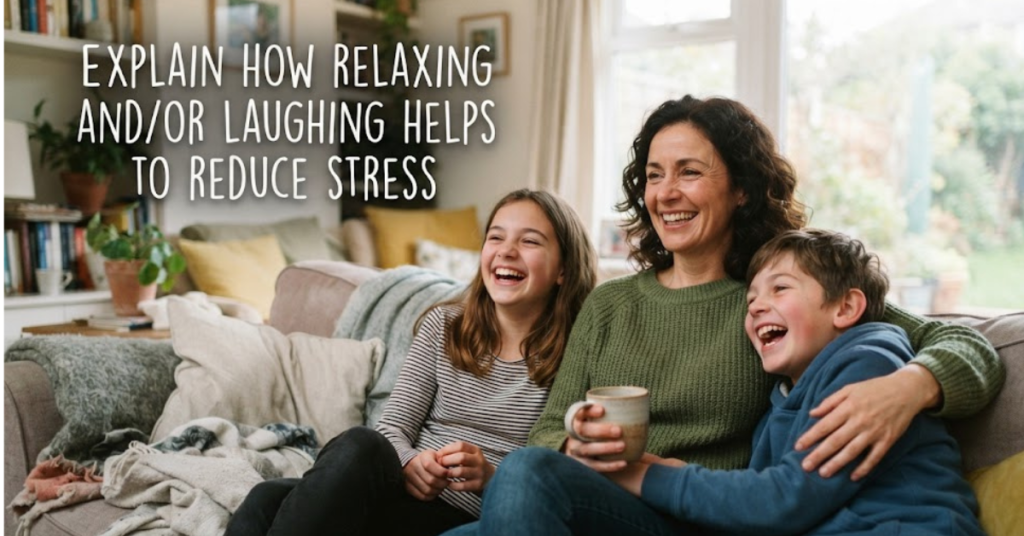

Have you ever noticed how a good laugh can instantly make a bad day feel a little better? Or how taking a few minutes to relax can help you think more clearly when you’re overwhelmed? If you’re looking to explain how relaxing and/or laughing helps to reduce stress, the answer lies in how these activities affect both the mind and body.
Stress is a natural response to challenges, but when it becomes constant, it can negatively impact physical health, emotional well-being, and daily performance. Fortunately, relaxation and laughter are two simple yet powerful tools that can help reduce stress levels, improve mood, and promote overall health. Understanding why they work can help you manage stress more effectively in everyday life.
What Is Stress?
Before discussing how relaxation and laughter help, it’s important to understand what stress actually is.
Stress is the body’s reaction to situations that feel demanding, challenging, or threatening. When stress occurs, the body activates its “fight-or-flight” response, releasing hormones such as cortisol and adrenaline.
In small amounts, stress can be helpful because it increases alertness and motivation. However, chronic stress can contribute to:
- Fatigue
- Anxiety
- Difficulty concentrating
- Headaches
- Sleep problems
- High blood pressure
- Weakened immune function
This is why finding healthy ways to manage stress is so important.
How Relaxing Helps Reduce Stress
One of the most effective ways to combat stress is through relaxation.
When you relax, your body shifts from a state of tension to a state of recovery. This activates the parasympathetic nervous system, often called the “rest and digest” system.
Relaxation Lowers Stress Hormones
When you’re stressed, cortisol levels rise. Prolonged elevation of cortisol can negatively affect both physical and mental health.
Relaxation techniques help lower cortisol levels by signaling to the brain that the perceived threat has passed.
As cortisol decreases, many people experience:
- Reduced anxiety
- Lower muscle tension
- Improved mood
- Better concentration
- Increased feelings of calm
Relaxation Slows Heart Rate and Breathing
Stress often causes rapid breathing and an increased heart rate.
Relaxation practices such as deep breathing, meditation, and mindfulness help slow these bodily responses.
This creates a calming effect throughout the body and can make stressful situations feel more manageable.
Relaxation Improves Sleep Quality
Many people find it difficult to sleep when they are stressed.
Relaxation techniques before bedtime can help quiet racing thoughts and prepare the body for restful sleep.
Better sleep then contributes to improved stress management the following day, creating a positive cycle.
Popular Relaxation Techniques for Stress Relief
There are many effective ways to relax and reduce stress.
Deep Breathing Exercises
Deep breathing helps calm the nervous system and promotes relaxation.
A simple technique includes:
- Inhale slowly through your nose.
- Hold your breath for a few seconds.
- Exhale slowly through your mouth.
- Repeat several times.
Even a few minutes can make a noticeable difference.
Meditation and Mindfulness
Meditation encourages focus and present-moment awareness.
Mindfulness helps individuals pay attention to their thoughts without becoming overwhelmed by them.
Research has shown that regular mindfulness practice can help reduce stress and improve emotional resilience.
Physical Relaxation Activities
Activities that relax both the mind and body include:
- Yoga
- Stretching
- Walking in nature
- Listening to music
- Reading a book
- Taking a warm bath
These activities help interrupt the stress cycle and encourage mental recovery.
How Laughing Helps Reduce Stress
While relaxation is often associated with calmness, laughter works differently but can be equally effective.
A genuine laugh triggers several positive changes in the body that help counteract stress.
Laughter Reduces Tension
When you laugh, muscles throughout the body contract and then relax.
This process helps release physical tension that may have built up during stressful situations.
Many people notice they feel lighter and more relaxed after a good laugh.
Laughter Lowers Stress Hormones
Like relaxation techniques, laughter can help reduce stress hormones such as cortisol and adrenaline.
At the same time, laughter stimulates the release of feel-good chemicals called endorphins.
Endorphins contribute to:
- Improved mood
- Reduced discomfort
- Greater feelings of happiness
- Increased emotional well-being
Laughter Improves Emotional Health
Stress often causes people to focus on problems and negative emotions.
Laughter helps create psychological distance from stressful situations, making them feel less overwhelming.
Even brief moments of humor can help shift perspective and improve emotional balance.
The Social Benefits of Laughter
One of the unique advantages of laughter is its ability to strengthen social connections.
Laughing with friends, family members, or coworkers helps create feelings of trust and belonging.
Strong social relationships are associated with:
- Lower stress levels
- Better mental health
- Increased resilience
- Improved life satisfaction
When people laugh together, they often feel more connected and supported during difficult times.
The Science Behind Relaxation and Laughter
Scientists have studied how relaxation and laughter influence the brain and body.
Research suggests that both activities can:
- Lower cortisol levels
- Reduce muscle tension
- Improve mood
- Support cardiovascular health
- Enhance immune function
- Promote emotional resilience
While relaxation primarily works by calming the nervous system, laughter combines physical, emotional, and social benefits that help counteract stress.
Together, they create a powerful combination for maintaining overall well-being.
Relaxation vs. Laughter: Which Is Better?
The good news is that you don’t have to choose one over the other.
Both relaxation and laughter offer valuable stress-management benefits.
Relaxation May Be Better For:
- Anxiety reduction
- Sleep improvement
- Physical recovery
- Mental clarity
- Emotional regulation
Laughter May Be Better For:
- Instant mood improvement
- Social bonding
- Reducing tension
- Shifting perspective
- Increasing positive emotions
Combining both approaches often provides the greatest benefit.
Simple Ways to Add More Relaxation and Laughter to Your Day
Reducing stress doesn’t require major lifestyle changes.
Try these simple strategies:
For More Relaxation
- Practice deep breathing for five minutes daily.
- Take short breaks throughout the day.
- Spend time outdoors.
- Listen to calming music.
- Create a relaxing bedtime routine.
For More Laughter
- Watch a funny movie or comedy show.
- Spend time with humorous friends.
- Read funny books or articles.
- Follow positive and entertaining content online.
- Learn to laugh at minor everyday frustrations.
Small habits can add up to meaningful improvements in stress management.
Why Stress Management Matters
Managing stress is about more than feeling better in the moment.
Long-term stress reduction can support:
- Heart health
- Immune system function
- Mental well-being
- Productivity
- Relationships
- Overall quality of life
Learning how to relax and laugh more often can become an important part of maintaining both physical and emotional health.
Frequently Asked Questions
Explain how relaxing and/or laughing helps to reduce stress.
Relaxing helps reduce stress by calming the nervous system, lowering stress hormones, and reducing physical tension. Laughing reduces stress by lowering cortisol levels, releasing endorphins, improving mood, and helping people feel more connected to others.
Why does laughter make you feel better?
Laughter stimulates the release of endorphins, which are natural chemicals that promote happiness and well-being. It also helps reduce muscle tension and stress hormones.
Can relaxation techniques lower anxiety?
Yes. Techniques such as deep breathing, meditation, and mindfulness can help reduce anxiety by calming the body’s stress response.
Does laughter improve mental health?
Laughter can improve mental health by boosting mood, reducing negative emotions, encouraging social connection, and helping people cope with challenges more effectively.
How often should you practice relaxation techniques?
Even a few minutes of relaxation each day can be beneficial. Consistent practice often provides the best long-term results.
Is laughter really good for physical health?
Yes. Research suggests laughter may help reduce stress hormones, improve circulation, relax muscles, and support overall well-being.
What is the fastest way to reduce stress?
Deep breathing, mindfulness exercises, taking a short walk, or sharing a laugh with someone can often provide quick stress relief.
Conclusion
To explain how relaxing and/or laughing helps to reduce stress, it’s important to recognize that both activities influence the mind and body in powerful ways. Relaxation helps calm the nervous system, lower cortisol levels, improve sleep, and reduce physical tension. Laughter, on the other hand, boosts mood, releases endorphins, strengthens social connections, and helps people view challenges from a healthier perspective.
The best part is that neither strategy requires expensive equipment or complicated training. By making time for relaxation and laughter each day, you can build resilience, improve emotional well-being, and create healthier responses to life’s inevitable stresses. Start with small changes today, and your mind and body will thank you for it.