
A cast iron skillet can last a lifetime—or even several generations—if you care for it properly. But one of the biggest myths about cast iron is that it’s difficult to clean. In reality, once you know how to clean a cast iron skillet after use, maintaining it takes just a few minutes.
Whether you’ve cooked steak, fried eggs, baked cornbread, or seared vegetables, proper cleaning helps preserve the skillet’s natural nonstick surface and prevents rust. In this guide, you’ll learn how to clean a cast iron skillet, remove burnt-on food, deal with rust, and keep your pan perfectly seasoned for years to come.
Why Proper Cast Iron Care Matters
Unlike nonstick cookware, cast iron develops a protective layer called seasoning. This seasoning is created when oil bonds to the surface through repeated heating, forming a natural coating that helps prevent sticking and rust.
Improper cleaning can:
- Strip away seasoning
- Cause rust to form
- Shorten the skillet’s lifespan
- Leave behind burnt food and odors
The good news is that routine maintenance is simple and only takes a few minutes after cooking.
What You’ll Need
Gather these supplies before cleaning your skillet:
- Warm water
- Soft sponge or dishcloth
- Nylon scrub brush
- Plastic pan scraper (optional)
- Coarse kosher salt
- Paper towels or lint-free cloth
- Neutral cooking oil (vegetable, canola, grapeseed, or avocado oil)
Avoid steel wool for everyday cleaning unless you’re intentionally removing rust.
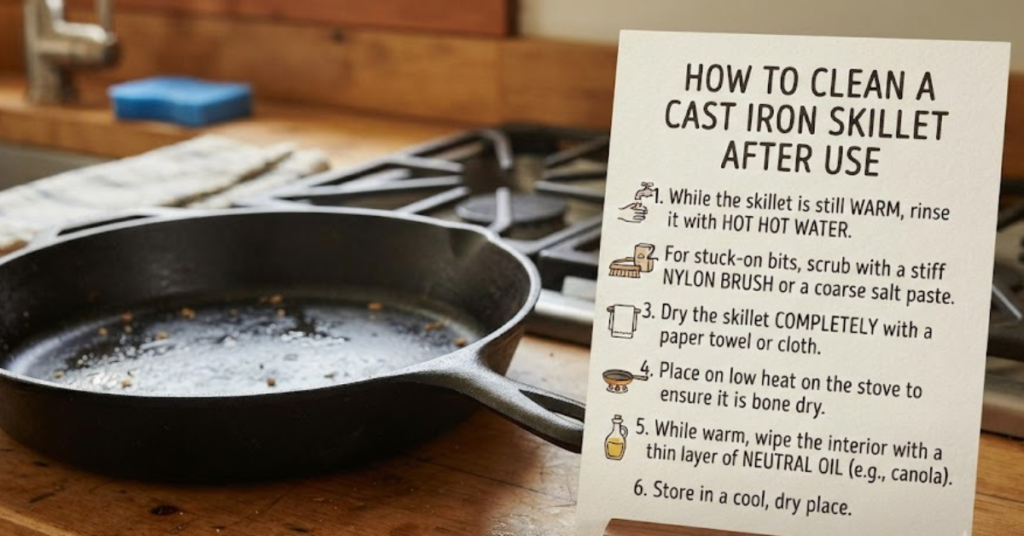
How to Clean a Cast Iron Skillet After Use
Cleaning your skillet immediately after cooking prevents food from hardening and makes cleanup much easier.
Step 1: Let the Skillet Cool Slightly
Allow the skillet to cool for a few minutes after cooking.
Never plunge a hot cast iron skillet into cold water. The sudden temperature change can cause the pan to warp or crack.
Step 2: Remove Food Residue
Use a wooden spatula or plastic scraper to loosen leftover food.
Most food should lift away easily if the skillet has been properly seasoned.
Step 3: Wash With Warm Water
Rinse the skillet under warm running water.
Use a soft sponge or nylon brush to gently scrub away remaining food particles.
For most meals, warm water alone is enough.
If necessary, you can use a small amount of mild dish soap. Modern cast iron experts generally agree that occasional soap won’t damage a well-seasoned skillet, provided you rinse and dry it thoroughly afterward.
Step 4: Dry Immediately
This is the most important step.
Dry the skillet completely using a clean towel.
Then place it over low heat on the stovetop for one or two minutes to evaporate any remaining moisture.
Moisture is the primary cause of rust.
Step 5: Apply a Thin Coat of Oil
While the skillet is still warm:
- Add a few drops of cooking oil.
- Spread it evenly over the cooking surface, sides, and handle using a paper towel.
- Wipe away any excess oil.
The skillet should look lightly polished—not greasy.
This quick step helps maintain the seasoning after every use.
How to Clean a Cast Iron Skillet After Cooking
If you’re wondering how to clean a cast iron skillet after cooking, the process is the same regardless of what you prepared.
The key steps are:
- Remove food residue.
- Wash with warm water.
- Dry thoroughly.
- Heat briefly.
- Apply a thin layer of oil.
Making this a habit keeps your skillet naturally nonstick.
How to Clean a Cast Iron Skillet After Cooking Steak
Cooking steak often leaves behind browned bits and grease.
If you’re learning how to clean a cast iron skillet after cooking steak, here’s the best approach:
- Pour off excess grease after the skillet cools slightly.
- Scrape away stuck bits.
- Wash with warm water.
- Use a nylon brush if necessary.
- Dry over low heat.
- Apply a thin coat of oil.
Avoid leaving steak drippings in the pan overnight, as they can become sticky and difficult to remove.
How to Clean a Cast Iron Skillet With Burnt-On Food
Burnt food can happen, especially after high-heat cooking.
If you’re searching for how to clean a cast iron skillet with burnt on or burnt-on residue, follow these steps.
Method 1: Simmer Water
Add about one inch of water to the skillet.
Bring it to a gentle simmer for several minutes.
The heat helps loosen stubborn food.
Carefully scrape away softened residue.
Method 2: Use a Pan Scraper
A plastic pan scraper removes stubborn food without damaging the seasoning.
Work gently around the stuck areas until the residue lifts away.
Method 3: Chainmail Scrubber
A stainless steel chainmail scrubber is specifically designed for cast iron.
It removes baked-on food while preserving the seasoned surface better than steel wool.
How to Clean a Cast Iron Skillet With Salt
Many experienced cast iron users prefer this traditional method.
If you’re wondering how to clean a cast iron skillet with salt, here’s how:
- Sprinkle a generous amount of coarse kosher salt into the warm skillet.
- Use a folded paper towel or clean cloth to scrub.
- The salt acts as a gentle abrasive.
- Discard the salt.
- Rinse lightly.
- Dry completely.
- Apply a thin coat of oil.
This method works particularly well for stuck food without removing seasoning.
How to Clean a Cast Iron Skillet That Has Rust
Rust isn’t the end of your skillet.
If you’re learning how to clean a cast iron skillet that has rust, you can usually restore it.
Step 1: Remove Rust
Use:
- Steel wool
- Fine-grit scrub pad
- Rust eraser
Scrub until all visible rust disappears.
Step 2: Wash Thoroughly
Wash the skillet with warm water and a small amount of dish soap.
Rinse well.
Step 3: Dry Completely
Place the skillet over low heat until every trace of moisture has evaporated.
Step 4: Re-Season the Skillet
Apply a very thin layer of cooking oil over the entire skillet.
Bake it upside down in a 450°F (232°C) oven for one hour.
Allow it to cool in the oven.
Repeat if necessary until a smooth black finish develops.
Should You Use Soap on Cast Iron?
One of the biggest cast iron myths is that soap should never touch the pan.
The truth is:
Modern dish soap is generally safe for well-seasoned cast iron when used occasionally.
The harsh lye soaps of decades ago could strip seasoning, but today’s mild detergents are much gentler.
Just avoid soaking the skillet in soapy water for long periods.
Common Mistakes to Avoid
Avoid these habits if you want your skillet to last for generations:
- Leaving it wet after washing
- Soaking it overnight
- Putting it in the dishwasher
- Storing food in the skillet
- Applying too much oil after cleaning
- Using metal scouring pads for routine cleaning
Proper drying is more important than almost any other step.
How Often Should You Re-Season Cast Iron?
Routine oiling after each use usually keeps seasoning in excellent condition.
A full oven re-seasoning is only necessary if:
- Rust develops
- Food sticks frequently
- The surface becomes dull or patchy
- Seasoning begins flaking
Many home cooks only need a full re-seasoning once or twice a year.
Extra Tips for Long-Lasting Cast Iron
Keep your skillet performing like new with these simple habits:
- Clean it shortly after cooking.
- Dry it immediately every time.
- Apply a thin coat of oil after each wash.
- Store it in a dry place.
- Place a paper towel inside when stacking cookware to absorb moisture.
These small steps make a big difference over time.
Frequently Asked Questions
How do you clean a cast iron skillet after use?
Allow the skillet to cool slightly, remove food residue, wash with warm water, dry it completely, heat briefly on the stovetop, and apply a thin coat of cooking oil before storing.
Can you use soap on a cast iron skillet?
Yes. A small amount of mild dish soap is safe for well-seasoned cast iron when used occasionally. Just rinse well, dry thoroughly, and reapply a light coat of oil.
How do you remove burnt-on food from cast iron?
Simmer a small amount of water in the skillet to loosen residue, then gently scrape it away with a pan scraper or chainmail scrubber. For stubborn spots, coarse kosher salt also works well as a natural abrasive.
Is salt good for cleaning cast iron?
Yes. Coarse kosher salt is a gentle abrasive that helps remove stuck-on food without stripping the skillet’s seasoning.
What causes rust on a cast iron skillet?
Rust develops when moisture remains on the skillet or when the protective seasoning has worn away. Drying the pan completely after washing helps prevent rust.
Can a rusty cast iron skillet be saved?
In most cases, yes. Remove the rust with steel wool, wash and dry the skillet thoroughly, then re-season it by applying a thin coat of oil and baking it in the oven.
Should you oil cast iron after every use?
Applying a very light coat of oil after cleaning helps maintain the seasoning, protects against rust, and keeps the cooking surface naturally nonstick.
Conclusion
Learning how to clean a cast iron skillet after use is one of the best ways to protect your investment and enjoy decades of reliable cooking. With just a few minutes of care after each meal, you can preserve the skillet’s seasoning, prevent rust, and maintain the naturally nonstick surface that makes cast iron so popular.
Whether you’re figuring out how to clean a cast iron skillet with burnt-on food, using salt as a gentle scrub, restoring a rusty skillet, or cleaning up after cooking steak, the key is consistency. Clean it promptly, dry it thoroughly, and finish with a light coating of oil. Make these simple steps part of your cooking routine, and your cast iron skillet will continue to deliver exceptional performance for generations to come.