
Baseboards may not be the first thing guests notice when they walk into your home—but clean baseboards can make an entire room look brighter, fresher, and better maintained. Unfortunately, they also collect an incredible amount of dust, pet hair, dirt, and scuff marks. The good news is that learning how to clean baseboards without removing paint is simple when you use the right techniques and cleaning products.
In this complete guide, you’ll discover how to clean baseboards safely without damaging painted surfaces. We’ll also cover how to clean baseboards easily, how to clean them without bending over, how to prepare them before painting, and the best ways to clean both baseboards and walls for a spotless finish.
Why Baseboards Get Dirty So Quickly
Baseboards sit at floor level, making them one of the most dust-prone areas in any home. Every time you walk through a room, tiny particles of dust, dirt, and pet hair are pushed toward the edges where they settle on the trim.
Other common causes include:
- Shoe scuff marks
- Vacuum cleaner bumps
- Grease splatters in kitchens
- Fingerprints
- Pet fur and dander
- Everyday household dust
Regular cleaning prevents dirt from becoming stubborn and helps preserve the paint.
What You’ll Need
Most painted baseboards can be cleaned with simple household supplies.
Gather the following:
- Microfiber cloths
- Soft sponge
- Vacuum with a brush attachment
- Bucket of warm water
- Mild dish soap
- White vinegar (optional)
- Magic Eraser (for stubborn scuffs)
- Soft-bristle toothbrush
- Dry microfiber towel
- Flat microfiber mop with an extendable handle (optional)
Avoid abrasive pads, steel wool, bleach, or harsh chemical cleaners that may damage painted surfaces.
How to Clean Baseboards Without Removing Paint
The safest way to clean painted trim is by using gentle cleaning methods rather than aggressive scrubbing.
Step 1: Dust the Baseboards
Before using any water, remove loose dust.
You can:
- Vacuum with a soft brush attachment
- Use a microfiber duster
- Wipe with a dry microfiber cloth
This prevents dust from turning into muddy streaks during washing.
Step 2: Prepare a Mild Cleaning Solution
Mix together:
- 1 gallon of warm water
- 1–2 teaspoons of mild dish soap
For greasy buildup, add a small splash of white vinegar.
Avoid overly concentrated cleaners, which may dull painted finishes.
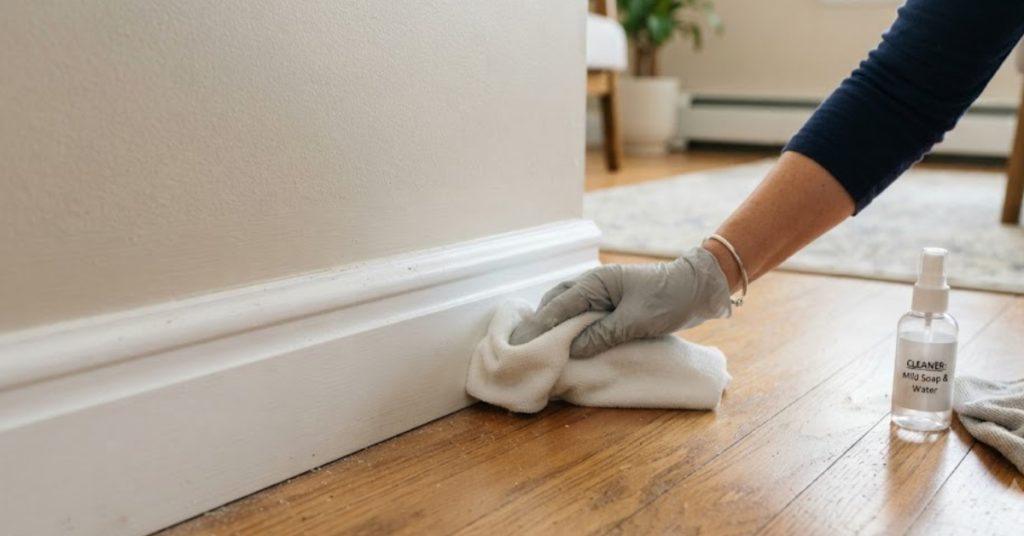
Step 3: Wipe Gently
Dip a microfiber cloth into the solution and wring it out well.
The cloth should be damp—not dripping.
Wipe each section of the baseboard using light pressure.
Work from one end of the room to the other for consistent results.
Step 4: Remove Scuff Marks
For stubborn marks:
- Use a damp Magic Eraser with very light pressure.
- Or gently rub with a soft microfiber cloth and mild dish soap.
Always test a hidden section first, especially on satin or glossy paint.
Step 5: Dry the Surface
Use a clean towel to remove any remaining moisture.
Drying helps protect painted wood and prevents water spots.
How to Clean Baseboards Easily
If you’re searching for how to clean baseboards easily, consistency is the secret.
A simple routine works best:
- Dust weekly.
- Wipe monthly with warm soapy water.
- Remove scuffs immediately.
Small, regular cleanings require much less effort than occasional deep cleans.
How to Clean Baseboards in House
Cleaning every room doesn’t have to be overwhelming.
Here’s an efficient approach:
- Start upstairs.
- Vacuum each room first.
- Dust the walls if needed.
- Wipe the baseboards.
- Dry immediately.
- Move to the next room.
Working systematically prevents you from missing sections.
How to Clean Baseboards Without Bending Over
One of the biggest complaints about baseboard cleaning is the constant bending.
Fortunately, there are easier methods.
Use a Flat Microfiber Mop
A microfiber mop with a swivel head can reach baseboards while allowing you to remain standing.
Simply dampen the microfiber pad and glide it along the trim.
Use an Extendable Duster
For routine dust removal, an extendable microfiber duster works extremely well.
It reaches low trim without putting strain on your back.
Wrap a Cloth Around a Broom
Secure a microfiber cloth around a broom head using rubber bands.
Lightly dampen the cloth and clean the baseboards while standing upright.
This simple DIY tool works surprisingly well for long hallways and larger rooms.
How to Clean Baseboards Without Bending
Whether you choose a microfiber mop, extendable cleaning tool, or long-handled duster, cleaning while standing is faster and much more comfortable—especially for larger homes or anyone with back or knee pain.
Professional house cleaners often use these tools because they save time while delivering excellent results.
How to Clean Baseboards Before Painting
Preparing trim before painting is just as important as choosing the right paint.
Follow these steps:
- Vacuum away loose dust.
- Wash with warm water and mild dish soap.
- Remove grease using diluted white vinegar if necessary.
- Rinse with clean water.
- Dry completely.
- Lightly sand glossy finishes if recommended.
- Wipe away sanding dust before applying primer or paint.
Clean surfaces allow paint to adhere better and produce a smoother finish.
How to Clean Baseboards and Walls
Dust often accumulates on both walls and trim.
For the best results:
- Dust the upper walls first.
- Wipe wall surfaces if needed.
- Clean the baseboards last.
- Dry both surfaces thoroughly.
Cleaning from top to bottom prevents dirty water from dripping onto freshly cleaned areas.
How to Remove Tough Stains From Baseboards
Some stains require extra attention.
Shoe Scuffs
Use a lightly dampened Magic Eraser or microfiber cloth.
Grease
Clean with warm water, mild dish soap, and a small amount of vinegar.
Crayon Marks
Most crayon marks come off easily with dish soap and a microfiber cloth.
Sticky Residue
Allow warm soapy water to sit on the residue for one minute before wiping gently.
Avoid scraping painted trim with metal tools.
Common Mistakes to Avoid
To protect painted baseboards, avoid these common mistakes:
- Using abrasive scrub pads
- Applying excessive water
- Scrubbing aggressively
- Using bleach or ammonia
- Skipping the dusting step
- Leaving wood trim wet
Gentle cleaning helps preserve both the paint and the material underneath.
How Often Should You Clean Baseboards?
A regular schedule keeps dirt from building up.
| Cleaning Task | Recommended Frequency |
| Dusting | Weekly or every two weeks |
| Light cleaning | Once a month |
| Deep cleaning | Every 3–6 months |
| Before painting | Always |
Homes with pets, children, or heavy foot traffic may require more frequent cleaning.
Tips to Keep Baseboards Cleaner Longer
Once you’ve cleaned your trim, these habits can help maintain it:
- Vacuum floors regularly.
- Dust with a microfiber cloth every week.
- Wipe spills immediately.
- Install felt pads under furniture.
- Keep indoor humidity balanced.
- Clean fingerprints before they become stubborn stains.
Routine maintenance reduces the need for deep cleaning.
Frequently Asked Questions
How do you clean baseboards without removing paint?
Use a microfiber cloth dampened with warm water and a small amount of mild dish soap. Wipe gently, avoid excessive moisture, and dry the surface immediately to protect the paint.
What is the easiest way to clean baseboards?
The easiest method is to dust them first with a vacuum brush or microfiber duster, then wipe them with a damp microfiber cloth using a mild cleaning solution.
How do you clean baseboards without bending over?
A flat microfiber mop, extendable duster, or broom wrapped with a microfiber cloth allows you to clean baseboards comfortably while standing.
Is vinegar safe for painted baseboards?
Yes. Diluted white vinegar is generally safe for most painted baseboards and works well for removing grease. Avoid using it full strength or on freshly painted surfaces.
Should you clean baseboards before painting?
Absolutely. Cleaning removes dust, grease, and dirt that could interfere with paint adhesion, resulting in a smoother, more durable finish.
How often should baseboards be cleaned?
Dust them weekly or biweekly, wipe them monthly, and perform a deeper cleaning every three to six months depending on household activity.
Can Magic Erasers damage paint?
Magic Erasers are mildly abrasive. They can remove stubborn scuff marks effectively, but excessive rubbing may dull glossy or delicate paint finishes. Always test an inconspicuous area first.
Conclusion
Learning how to clean baseboards without removing paint is a simple but effective way to improve the appearance of your home without risking damage to your trim. By using gentle cleaning solutions, soft microfiber cloths, and proper techniques, you can safely remove dust, grime, grease, and scuff marks while preserving the painted finish.
Whether you’re figuring out how to clean baseboards easily, how to clean baseboards in house, how to clean baseboards without bending over, how to clean baseboards before painting, or how to clean baseboards and walls, the key is regular maintenance. A few minutes of care every month can keep your baseboards looking freshly painted, reduce deep-cleaning time, and help your entire home feel cleaner and more inviting. For even better results, pair your baseboard cleaning routine with regular wall washing, floor care, and dusting to maintain a polished, well-kept living space.