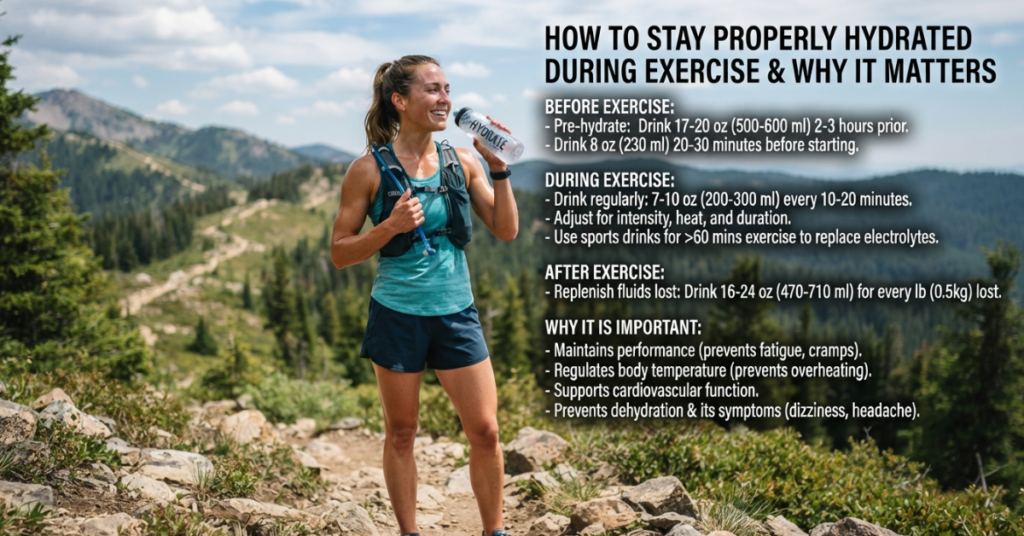

Knowing how to remain properly hydrated during exercise is an important part of staying safe and performing well. When you exercise, your body produces heat and loses water through sweat. Replacing those fluids helps regulate body temperature, maintain normal circulation, support muscle function, and reduce the risk of dehydration.
How to Stay Properly Hydrated During Exercise
A good hydration routine starts before the workout rather than waiting until you feel extremely thirsty. The amount of fluid you need depends on factors such as exercise intensity, duration, temperature, humidity, and how much you sweat.
Before Exercise
Drink fluids regularly throughout the day and begin exercise well hydrated. Avoid trying to drink a large amount all at once immediately before exercising.
During Exercise
For shorter, lower-intensity workouts, drinking water when thirsty is generally sufficient. During longer or more intense sessions, especially in hot conditions, you may need to drink more consistently to replace fluid losses.
Keep these habits in mind:
- Bring a water bottle so fluids are easily available.
- Drink at regular intervals rather than waiting until you are very thirsty.
- Increase fluid intake when exercising in hot or humid conditions.
- For prolonged, intense exercise, consider a beverage containing electrolytes, particularly if you sweat heavily.
After Exercise
Hydration should continue after the workout. Replacing fluids lost through sweat helps the body recover and restores normal fluid balance.
Why Hydration Is Important for Exercise
Water plays several essential roles during physical activity. It helps transport nutrients, supports blood circulation, lubricates joints, and assists the body in controlling its temperature.
When fluid losses become significant, dehydration can contribute to symptoms such as:
- Fatigue
- Headache
- Dizziness
- Reduced exercise performance
- Muscle weakness
- Difficulty regulating body temperature
In more serious cases, substantial dehydration can become a medical concern, particularly during prolonged exercise in hot conditions.
Water vs. Electrolyte Drinks
Water is an excellent choice for many everyday workouts. However, electrolyte-containing drinks can be useful during prolonged or particularly strenuous exercise because sweating causes the body to lose sodium and other electrolytes along with water.
The key is not to assume that every workout requires a sports drink. For many short exercise sessions, plain water and a normal balanced diet provide adequate hydration and electrolytes.
How Much Should You Drink?
There is no single amount that works for everyone. Sweat rates vary considerably between individuals, so hydration needs should be adjusted according to the workout and environment.
A practical approach is to:
- Start the workout adequately hydrated.
- Drink according to thirst and exercise conditions.
- Pay attention to unusually heavy sweating and signs of dehydration.
- Replace fluids after exercise.
Avoid forcing excessive amounts of water. Drinking far more fluid than your body needs can also be dangerous because it can dilute the sodium concentration in the blood.
Signs You May Need More Fluids
Thirst, dry mouth, headache, unusual fatigue, dizziness, and reduced performance can indicate that you need to pay closer attention to hydration. Very dark urine can also be a useful general clue that you may need more fluids, although urine color can be affected by other factors as well.
If you experience confusion, fainting, severe weakness, persistent vomiting, or other serious symptoms during or after exercise, seek medical attention promptly.
Frequently Asked Questions
Is water enough during exercise?
For many short or moderate workouts, yes. Longer or very intense exercise, particularly in hot conditions, may increase the need for additional fluids and electrolytes.
Should you drink water before exercising?
Yes. Starting exercise hydrated is generally better than waiting until you become thirsty during the workout.
Why is hydration important during exercise?
Hydration helps regulate body temperature, maintain circulation, support muscle function, and replace water lost through sweating.
Are sports drinks necessary for every workout?
No. They can be useful for prolonged or intense exercise when substantial fluid and electrolyte losses occur, but they are not necessary for every workout.
Can you drink too much water while exercising?
Yes. Excessive water intake can dilute blood sodium and, in severe cases, cause a potentially dangerous condition called hyponatremia.
Conclusion
To explain how one remains properly hydrated during exercise and why it is important, the main idea is simple: start hydrated, replace fluids during activity based on your needs, and continue drinking afterward. Water is enough for many workouts, while longer or more demanding sessions may require attention to electrolytes as well. The goal is balanced hydration—not simply drinking as much water as possible.